

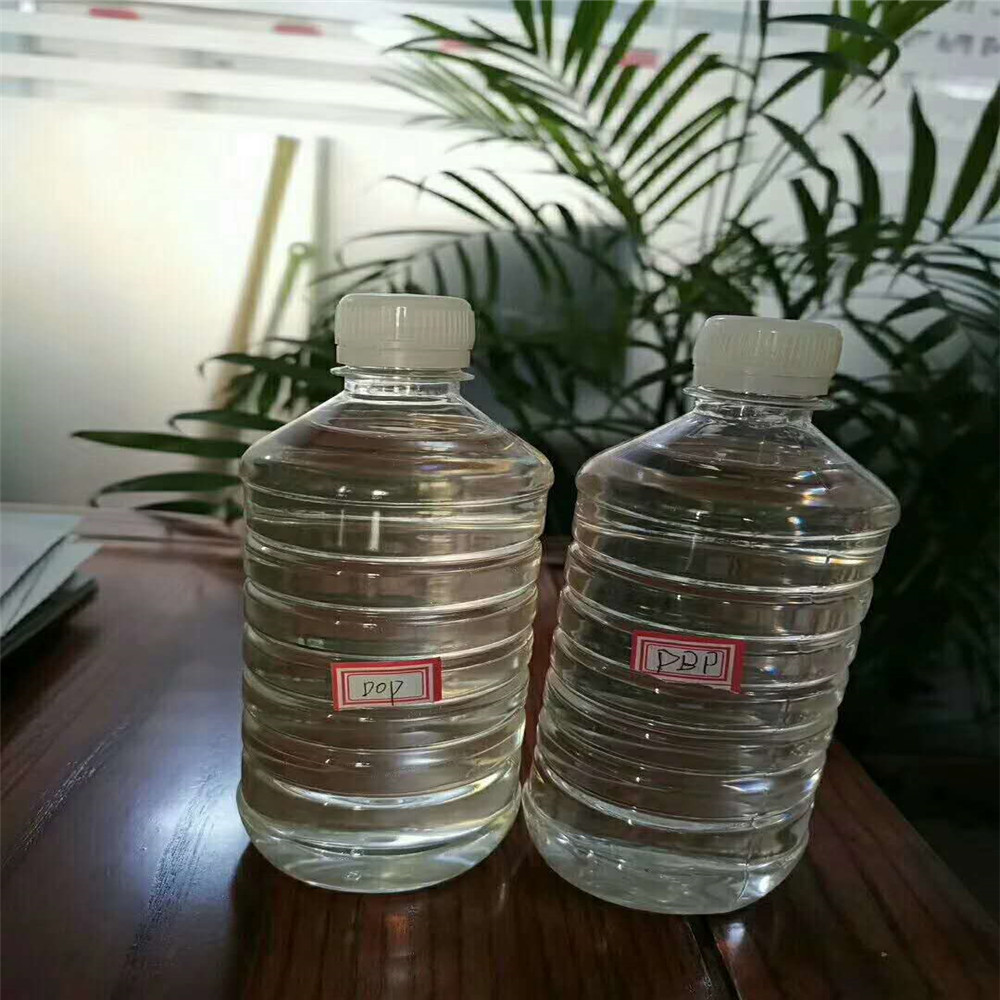
DOP and DOTP are the two most common plasticizers in industry, with similar names but significant differences in properties and application scenarios. This article will help you clarify the differences between chemical structures, performance characteristics, environmental friendliness, and practical applications. Whether it is purchasing and selecting products or technical references, you can have a clear understanding.
Deep interpretation: Do you really understand the difference between plasticizer DOP and DOTP?
In the plastic processing industry, especially in the production of polyvinyl chloride (PVC) products, plasticizers are indispensable and important additives. It can increase the flexibility, processability, and softness of materials. Among numerous types of plasticizers, DOP and DOTP are two commonly mentioned materials. Although they differ only by one word and are often used for comparison or even substitution, they have a world of differences in chemical essence, performance, and environmental attributes. Today, let's break down the differences between these two in detail.
1、 Different identities: Starting from chemical structure
Although the molecular formulas of DOP and DOTP are both C ₂₄ H ∝₈ O ₄ and their molecular weights are almost the same, their atomic arrangements are completely different, which determines their fundamental differences in properties.
DOP (dioctyl phthalate), also known as di (2-ethylhexyl) phthalate, is obtained by esterification of phthalic acid with 2-ethylhexanol. Its structure is based on phthalic acid and belongs to phthalate ester plasticizers. At room temperature, it is a colorless oily liquid with a unique odor and is insoluble in water.
DOTP (dioctyl terephthalate), also known as di (2-ethylhexyl) terephthalate, is produced by the reaction of terephthalic acid with 2-ethylhexanol. Its structure is based on terephthalic acid. It usually appears as a colorless to pale yellow transparent oily liquid, also insoluble in water, but with a slight special odor or no odor.
Simply put, the two are like "twins" but with vastly different personalities: DOP is a "ortho" structure, while DOTP is a "para" structure. This structural difference directly leads to their differentiation in performance.
2、 Performance differences: from electrical insulation to temperature resistance
In terms of specific physical and chemical properties, DOTP exhibits many characteristics that surpass traditional DOP, which is also an important reason why it is considered an upgraded substitute for DOP.
1. Electrical insulation performance
The advantages of DOTP are very obvious in fields such as wires and cables that require high electrical performance. The volume resistivity of DOTP is about 10-20 times higher than that of DOP. This means that PVC products using DOTP as a plasticizer have better electrical insulation properties, especially suitable for PVC cable materials that require high insulation.
2. Heat resistance and volatility
The heat resistance of DOTP is superior to that of DOP. The boiling point of DOTP is about 400 ° C and the flash point is about 210 ° C, while the boiling point of DOP is about 386 ° C and the flash point is about 190 ° C (some data is about 405 ° F and 207 ° C). A higher flash point and boiling point mean that DOTP is more difficult to evaporate during high-temperature processing or use. Therefore, DOTP can fully meet the temperature resistance requirements of wires and cables, making it an ideal choice for producing cable materials with a temperature resistance of 70 ℃.
3. Cold resistance and low tenderness and softness
The flexibility of materials is crucial in low-temperature environments. The solidification point of DOTP is about -48 ℃, while DOP is about -50 ℃, both of which perform very well. Relevant materials indicate that due to the linear molecular structure of DOTP being similar to some cold resistant plasticizers, its cold resistance is also good, even better than traditional DOP.
4. Withdrawability and durability
When plastic products come into contact with oil, water, or soapy water, plasticizers may be "extracted" and cause the products to harden. DOTP exhibits excellent performance in this regard, with good resistance to extraction and soap water, demonstrating excellent durability in products.
3、 Environmental Protection and Safety: Who is the True 'Green' Plasticizer?
This may be the most essential difference between DOP and DOTP, and it is also the core driving force of industry transformation in recent years.
DOP belongs to phthalate ester plasticizers. Scientific research shows that some phthalic substances (such as DEHP) may pose potential risks to human health. For example, a small amount of inhalation may cause shortness of breath, a large amount of intake may affect the central system, and even have been reported to affect fetal development. Therefore, developed countries such as Europe and the United States strictly restrict the application of six (6p) or sixteen (16p) phthalate plasticizers such as DOP in toys, medical devices and food contact materials.
. It is not included in the list of o-benzene plasticizers restricted by the European Union, and is recognized as an environmental friendly plasticizer. For those export-oriented enterprises who want to break the EU "environmental barriers", DOTP is an ideal alternative to DOP.
4、 Application field: show their abilities
Due to the difference in performance, the application focus of the two is also different.
Application of DOP: as a traditional general plasticizer, DOP has a wide range of applications. It has good compatibility with most synthetic resins and rubber. It is mainly used for processing PVC resin, manufacturing artificial leather, agricultural film, packaging materials, etc. .
Application of DOTP: with its superior electrical performance and heat resistance, the application of DOTP is more targeted:
- wire and cable: This is the core application field of DOTP, especially for cable sheath and insulation materials that require temperature resistance of 70 ℃.
-Automotive interior: DOTP is used for PVC products in cars, and can effectively solve the problem of "fogging" of automotive glass windows due to the volatilization of plasticizer.
-High grade products: because of its good migration resistance and durability, it is also used in high-grade furniture paint, lubricants for precision instruments, plasma storage bags and other highly demanding fields.
-General soft products: it can also be used for artificial leather, film, hose, sealing strip, etc., replacing DOP to improve product quality.
Summary
In general, although the names of DOP and DOTP are similar, in terms of performance, DOTP is better than traditional DOP in terms of heat resistance, electrical insulation and extraction resistance; In terms of environmental protection, DOTP is an environmental friendly plasticizer, which can meet the requirements of international environmental protection regulations such as the European Union, while DOP is facing more and more use restrictions; In the economic dimension, with technological progress, the price of DOTP is gradually close to that of DOP, and its cost performance advantage is increasingly prominent, which is also an important reason why it has become the preferred alternative to DOP.
With the increasing global attention to green chemistry and environmental friendly materials, DOTP, a plasticizer with excellent performance and environmental friendliness, will play a more important role in the plastic processing industry in the future. For enterprises, according to the market positioning and performance requirements of final products, scientific selection of DOP or DOTP is not only to meet the needs of regulations, but also the key to enhance product competitiveness.