

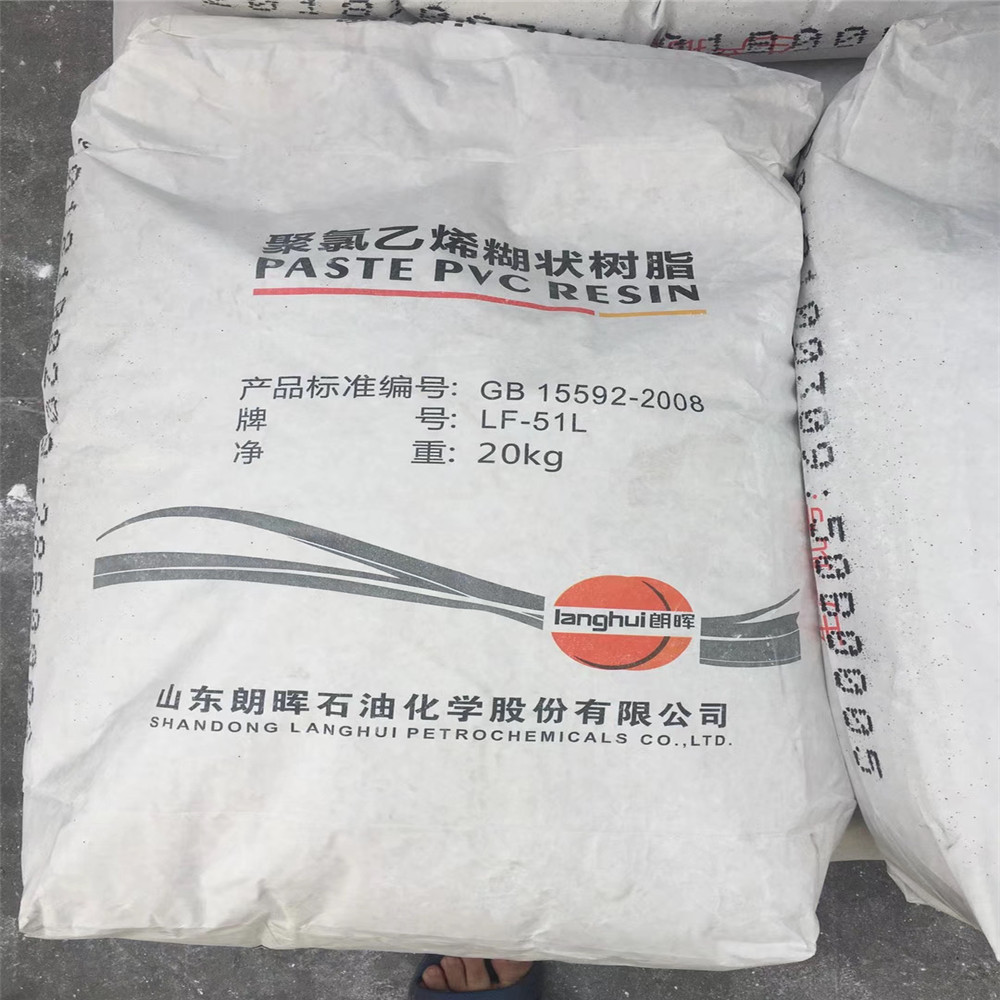
In August, the PVC paste resin market was affected by seasonal maintenance in the downstream glove industry, weak end-user demand for bulk materials, and abundant market supply. The short-term market conditions were under pressure and trading was sluggish. With the completion of maintenance, the recovery of demand, and the release of export advantages by the end of the third quarter, the market is expected to see a phased recovery in the fourth quarter.
As August approaches, the paste PVC resin industry chain enters a seasonal adjustment cycle, ushering in a phased shift in the market landscape. The downstream PVC glove industry enters the traditional maintenance off-season, with sustained weakening support from end-user demand for raw materials. After experiencing a surge in prices in the first half of the year, the upstream PVC paste resin is currently in a state of high-level stalemate, with sluggish transactions for high-priced supplies and gradually easing prices. Overall, both the supply and demand sides of the market are under pressure, and there are no significant short-term positive drivers, leading to a continued weak market trend.
1. PVC gloves enter the peak maintenance season, and raw material demand continues to decline
From the perspective of industry seasonality, the third quarter marks the traditional maintenance period for the domestic PVC glove industry. From the end of the second quarter to the third quarter, the continuous high temperature weather, coupled with the industry's off-season characteristics, has continuously suppressed the operating load of enterprise plants. Most glove enterprises plan to carry out plant maintenance in mid-to-late August. Monitoring data shows that the capacity utilization rate of the domestic PVC glove industry was only 41.21% at the beginning of this month. With the subsequent implementation of maintenance plans, the industry's operating rate may further decline.
Looking back at the first half of 2026, the PVC glove industry exhibited a significant fluctuation in production activity. In the first quarter, the concentrated release of export orders in the industry drove production for enterprises, while also pushing up the inventory levels of finished products. In mid-April, impacted by the US "reciprocal tariff" policy, the industry's inventory pressure rapidly escalated, with some enterprises' inventory levels reaching 2-3 times the normal level, and the industry's capacity utilization rate once fell to a low of 21.5%.
The tariff policy has recently undergone marginally favorable adjustments, providing support for industry exports. Starting from July 24, 2026, the United States reduced the additional tariffs imposed on PVC gloves from China, with the tax rate uniformly lowered to 12.5%, which is on par with the tax rates of major overseas competitors such as Vietnam. This has significantly restored the competitiveness of domestic PVC glove exports. Despite the uncertainty surrounding future tariff policies, the industry generally predicts that exports to the United States and Japan will remain stable in 2026. The development of emerging markets and applications in specialized fields will become new growth drivers for the industry, and the annual industry export volume is expected to achieve a slight growth of 3%-5%.
The demand side has been transmitted to the raw material market. Currently, glove enterprises are mainly engaged in replenishing their inventory to meet rigid demand, and the market sentiment is strongly cautious. Against the backdrop of incomplete clearance of finished product inventory and continuously declining plant operating rates, the procurement pace of EPVC resin by enterprises has slowed down significantly. The contraction effect of end-user demand is transmitted upstream, directly suppressing the market price trend of PVC paste resin.
II. PVC paste resin supply is abundant, but high-price transactions are sluggish, leading to a loosening of the market situation
PVC paste resin, as the core raw material for PVC gloves, currently exhibits a typical pattern of "high price but low demand" in the market. Currently, the overall capacity utilization rate of the industry remains relatively high at 72.71%, with ample market supply and no obvious signs of contraction; however, the downstream glove industry's concentrated maintenance has led to a continuous weakening of rigid demand, gradually highlighting the mismatch between supply and demand, and the market situation is becoming increasingly weak.
In terms of pricing, the overall PVC paste resin market in Jiangsu is stable yet slightly weak, with market transactions primarily driven by rigid demand. Regarding the prices of specific product categories, the quotation for glove material using the micro-suspension method is 6,900-7,200 yuan/ton, the quotation for bulk material using the micro-suspension method is 6,900-7,300 yuan/ton, and the quotation for bulk material using the seed emulsion method is 6,150-6,650 yuan/ton. Actual transaction prices often require one-on-one negotiation. According to industry feedback, the difficulty in closing deals for high-priced goods has become a normal occurrence in the industry. The downstream end-users' mentality of "buying when prices rise and not buying when prices fall" is prominent, leading to a sluggish overall purchasing willingness and a subdued trading atmosphere in the market.
The supply side continues to release incremental capacity, further exacerbating the pressure on market supply and demand. This month, the maintenance of Inner Mongolia Junzheng's equipment has ended, and an additional 15,000 tons of production capacity has been successfully put into place. The short-term abundant supply in the market is unlikely to reverse. Apart from glove materials, the downstream end-user demand for bulk materials is also sluggish. Due to the dual impacts of high temperatures and sluggish end-user consumption, traditional downstream product enterprises such as artificial leather, wallpaper, and toys have maintained low operating rates, significantly reducing their consumption capacity for PVC paste resin. The dual weakening demand for PVC paste resin glove materials and PVC paste resin bulk materials has further exacerbated the imbalance between supply and demand in the PVC paste resin market.
Overall, the current PVC paste resin market is characterized by a stable supply side at a high level and a comprehensive contraction on the demand side. The market lacks effective positive support, and short-term price pressure and a weakening market trend may persist.
III. Future Market Prediction
In the short term, the mid-to-late August period will witness a peak maintenance season in the PVC glove industry. It is anticipated that the industry's capacity utilization rate will decline to approximately 38%, leading to a continued contraction in the procurement demand for PVC paste resin. Simultaneously, due to the downstream terminals of PVC paste resin experiencing a low demand during the high-temperature off-season, the operating rate is unlikely to recover in the short term. The industry pattern, characterized by rigid raw material procurement and overall market hesitation, remains intact, continuously suppressing the price trend of paste resin.
In the medium term, after the high temperature weather subsides at the end of the third quarter and the centralized maintenance of enterprises is completed, the operating load of the PVC glove industry is expected to steadily recover. The demand for inventory replenishment by enterprises may be intensively unleashed, driving the demand for raw materials to rebound. At the policy level, the US has reduced the tariff on PVC gloves from China to 12.5%, which is on par with overseas competitors, effectively restoring the export competitiveness of the domestic industry and providing a guarantee for stable export orders. The slight growth trend of 3%-5% for the whole year has been basically established, which will provide core support for the recovery of demand for PVC paste resin in the fourth quarter.