

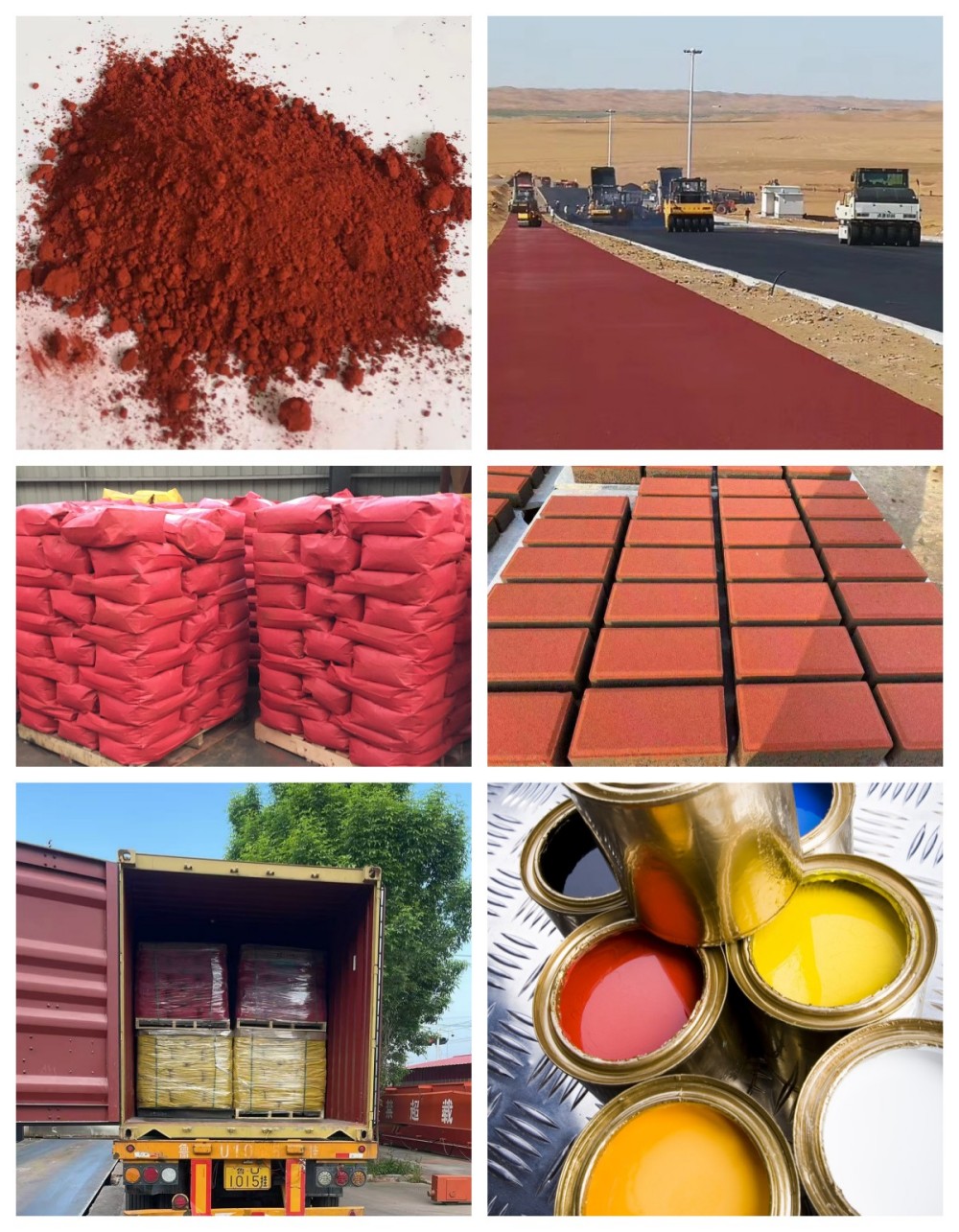
- Iron oxide yellow and iron oxide red are both important components of iron oxide pigments. They have significant differences in color, molecular formula, crystal structure, as well as production and application fields. Understanding the distinctions between these iron oxide yellow and iron oxide red not only helps us better understand these two pigments but also guides us to make more appropriate choices in different situations.
- First, in terms of color, the difference between iron oxide yellow and iron oxide red is obvious at a glance. Iron oxide yellow is a powdered pigment ranging from lemon yellow to brown, with a bright and stable color. This color mainly comes from the iron ion Fe3+ in its molecule. Among the iron ions, Fe3+ appears yellow, so the overall tone of iron oxide yellow is yellowish. In contrast, iron oxide red is a powder-like substance ranging from red to reddish-brown, with a bright and long-lasting color. This red color is the characteristic feature of iron oxide red, making it widely used in multiple fields such as construction, coatings, and plastics.
- Second, in terms of molecular formula, iron oxide yellow and iron oxide red also have obvious differences. The molecular formula of iron oxide yellow is Fe2O3·H2O, which means it is a monohydrate of iron oxide, that is, the iron oxide molecule combines with the water molecule. This combination makes the crystal structure of iron oxide yellow more complex and also endows it with some unique properties. The molecular formula of iron oxide red is Fe2O3, which is iron oxide without water molecules. This anhydrous state makes iron oxide red more stable in chemical properties and easier to process and apply.
- The difference in crystal structure is also one of the important distinctions between iron oxide yellow and iron oxide red. Iron oxide yellow has a γ-Fe2O3 structure, in which iron atoms are tetrahedral coordinated, and there are more free electrons on the crystal surface. This structure endows iron oxide yellow with some unique characteristics in physical and chemical properties, such as excellent dispersibility, storage stability and compatibility with other components. Iron oxide red, on the other hand, has a β-Fe2O3 structure, in which iron atoms are octahedral coordinated, forming a crystal structure with stable magnetism. This structure makes iron oxide red widely used in magnetic materials, catalysts and other fields.
- In terms of application fields, yellow iron oxide is mainly used as a yellow pigment or colorant, and is widely applied in the coloring of various concrete prefabricated components, building materials, as well as coatings, plastics, rubber and other products. Due to the excellent lightfastness, weather resistance and covering power of iron oxide yellow, its application in outdoor environments is particularly prominent. In addition, iron oxide yellow can also be used as an intermediate in the iron oxide series of pigments to produce iron oxide pigments of other colors, such as iron oxide red and iron oxide black. This versatility makes iron oxide yellow hold an irreplaceable position in the pigment industry. In contrast, the application fields of iron oxide red are much more extensive. As an important inorganic pigment, red iron oxide has extensive applications in multiple fields such as coatings, plastics, rubber, ceramics, and glass. In the coatings and paints industry, iron oxide red has become an ideal choice due to its bright red color, good gloss and strong weather resistance. In plastic and rubber products, adding an appropriate amount of iron oxide red can make the products present a highly saturated and stable red color, enhancing the ornamental value and market competitiveness of the products. In addition, iron oxide red can also be used as a catalyst, magnetic material, and drug carrier in the medical field, etc. This wide range of application fields makes iron oxide red highly valuable in industrial production.
- V. In terms of the preparation process, there are also certain differences between iron oxide yellow and iron oxide red. The preparation methods of iron oxide yellow mainly include the oxidation method of ferrous sulfate and the oxidation method of aromatic nitro compounds, etc. These methods prepare iron oxide yellow pigments with specific structures and properties through different chemical reaction pathways. The preparation methods of iron oxide red are more diverse, including drying method, wet method and thermal decomposition method, etc. These methods can select the most suitable preparation process based on different production requirements and cost considerations.
- From an economic perspective, due to the differences in production processes and technological maturity, iron oxide red is often easier to produce and obtain on a large scale than iron oxide yellow. Therefore, it may become a more cost-effective choice in some application fields. However, for specific uses, if a certain special tone effect is required, iron oxide yellow may be preferred even if the cost is relatively high.
- Seven. In terms of safety, both iron oxide yellow and iron oxide red are relatively safe pigments. They all have high chemical stability and thermal stability, and are not prone to decomposition or the production of harmful substances. However, during use, it is still necessary to avoid prolonged contact with or inhalation of dust to prevent adverse effects on health. In addition, for applications in specific fields such as food and medicine, it is also necessary to strictly abide by relevant regulations and standards to ensure the safety and compliance of the products.
- Manufacturer's summary Although iron oxide yellow and iron oxide red are both important components of iron oxide pigments, they have significant differences in color, molecular formula, crystal structure, as well as production and application fields. These differences make them have their own unique application values in different situations. Therefore, when we choose and use these two pigments, Appropriate choices should be made based on specific application requirements and conditions.