

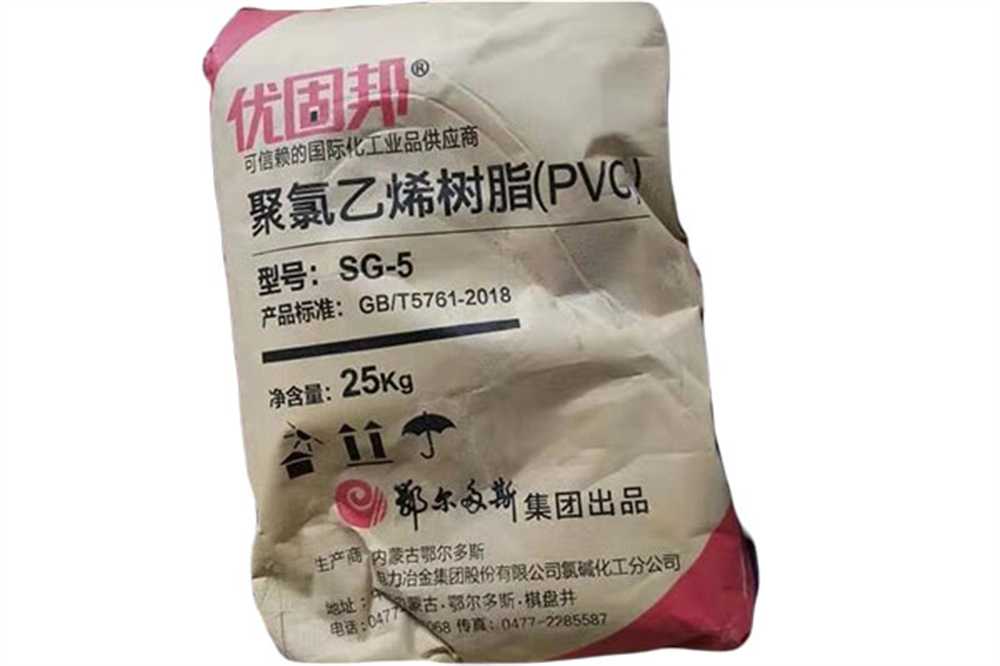
In the production of soft PVC products, plasticizers are the core raw materials for regulating hardness, flexibility, and processing flow. The commonly available products on the market include general-purpose, environmentally friendly, and heat-resistant types, among others, with high-heat-resistant categories such as TOTM. The compatibility differences among these types are significant. Most workshops have long faced two major pain points: relying on experience for material allocation, leading to batch variations in hardness and softness; and arbitrarily adjusting plasticizer dosage to accommodate processing feel, which not only results in raw material cost waste but also easily causes issues such as plasticizer migration, oil bleeding, and substandard low-temperature and heat resistance performance. To achieve precise dosage and stable performance, it is not sufficient to rely solely on empirical formulas. A dual-verification approach of formula base data validation plus on-site measurement data review must be implemented, ensuring objective and evidence-based processes, with batch production only initiated after data compliance is confirmed.
1. Reference Basic Dosage of Plasticizers in Different Systems (Industry Measured Standard Data)
Based on 100 parts of PVC resin as a unified benchmark, within the conventional range of filler addition, after thousands of sets of production data statistics, precise dosage intervals are divided:
The standard dosage of conventional plasticizers for general soft products (ordinary sealing strips, general hoses) is 52-58 parts, and the mainstream value for conventional DOTP systems is 55 parts
High soft and cold resistant products (low-temperature hoses, outdoor soft accessories) require a standard dosage of 58-65 parts of cold resistant plasticizers. Production in low-temperature environments should prioritize approaching the upper limit
High heat resistant molded products (wire harness sheaths, high-temperature seals) with TOTM as the main heat-resistant plasticizer system: 48-55 parts, the higher the heat resistance requirement, the lower the overall reasonable dosage
Standard dosage of plasticizer for high filling economic products (general ordinary profiles): 45-52 parts. For every 10 parts increase in filling, the plasticizer is simultaneously reduced by 2-3 parts
Core conclusion: Under the same hardness requirements, the filling efficiency of heat-resistant plasticizers is higher, and the required amount of additives is lower than that of ordinary general-purpose plasticizers.
2、 First layer verification: Laboratory formula theoretical data verification
The hardness benchmark verification specifies the Shore hardness standard specified by the customer in advance. According to the basic ratio of small test strips, the hardness is tested after standing at room temperature for 24 hours. The error is controlled within ± 1A to be qualified. If it exceeds the range, the amount of plasticizer is fine tuned.
The verification of melt flow data detects the melt index of the material. Under the same production process, for every increase or decrease of 3 parts of plasticizer, the melt flow rate fluctuates within a fixed range to determine whether the dosage is suitable for the current extrusion and rolling equipment speed.
Basic compatibility verification: Static standing for 72 hours, observing the surface condition of the sample, no oil leakage, no whitening or delamination, proving that the current dosage matches the resin and additive system and is qualified.
3、 Second layer verification: secondary review of on-site production test data
The compliance of laboratory data is only the basis, and it must be verified again before entering the production line to prevent the disconnection between theory and on-site production:
Verify the fixed barrel temperature, screw speed, and melt pressure of the extrusion process status, observe the smoothness of the discharge, and ensure that the discharge is smooth without interruption or pressure build-up, representing that the amount of plasticizer is suitable for the current processing conditions; If the discharge is dry and the pressure is high, it should be moderately supplemented. If the discharge is too soft and sagging, it should be slightly reduced.
Real time physical property review of finished products: After mass production of 100 meters of finished products, 3 sets of samples are randomly selected for rapid on-site testing of bending toughness and shaping stiffness. If the sample data is consistent with the previous stage, it is considered qualified. If it is brittle and prone to breakage, it is confirmed that the amount of plasticizer used is insufficient; Soft to the touch and prone to deformation, confirm that the dosage exceeds the standard.
Long term stability data verification: Continuous production for 4 hours, with finished products sampled every hour to record hardness and appearance status data. The data shows no significant fluctuations, proving that the ratio can be used stably for a long time; Continuous data offset, adjust fixed usage in a timely manner.
4、 Objective laws for adjusting the dosage of plasticizers in different categories
Ordinary universal plasticizer: good flowability, high feeding tolerance, floating up and down by 3 parts, less likely to cause obvious quality problems, but long-term excessive use can easily lead to low-temperature precipitation
Environmentally friendly composite plasticizer: with balanced compatibility and a narrow dosage range, a fluctuation of 2 parts can significantly change the texture of the finished product, and strict data control is necessary
High heat resistant plasticizer: with stable molecular structure and high plasticizing efficiency, the dosage of ordinary plasticizers cannot be blindly copied. Blindly adding too much not only fails to improve performance, but also directly reduces the heat resistance and setting ability of the product
5、 Key points for strict control of dosage and avoiding pitfalls on site (repeatedly verified by data)
It is strictly prohibited to change the quantity arbitrarily based on the hand feel. All adjustments to the quantity must be based on hardness testing data and melting data
When replacing plasticizers of different brands and categories, the original fixed quantity cannot be used, and double-layer data verification must be conducted again
Synchronized review of seasonal temperature changes data, with high environmental temperatures in summer, the overall usage can be reduced by 1-2 servings; The winter temperature is relatively low, which can be adjusted up 1-2 times, and the data should meet the standard
When producing with recycled materials, the recycled materials come with residual plasticizers, and the residual content needs to be calculated in advance. At the same time, the number of newly added plasticizers should be reduced, and double verification should be carried out to avoid overall excessive usage
6、 Implementation effect of dual data verification
The batch error of finished product hardness is controlled within the smallest range in the industry, and the one-time pass rate of customer acceptance is greatly improved
Accurately locking in the optimal amount of additives can save 80-150 yuan in plasticizer raw material costs per ton of product
Avoiding common production defects such as precipitation, yellowing, brittle cracking, and inadequate heat resistance caused by imbalanced usage from the source
Unified and standardized data matching, even novice masters can accurately control production standards and break free from the constraints of old experience
Practical summary
Theoretical ratio is determined first, and hardness flow is verified first; Online mass production and retesting, with dual alignment of working conditions and physical properties; Different categories have different quantities, and the data should be accurate and not blindly followed; Double verification ensures stable ratio and improves quality while reducing costs.