

1.What exactly are they "what things"?
1) Calcium carbonate: CaCO₃, essentially an ionic crystalline mineral with a regular structure and high hardness, but inherently poor compatibility with organic polymers.
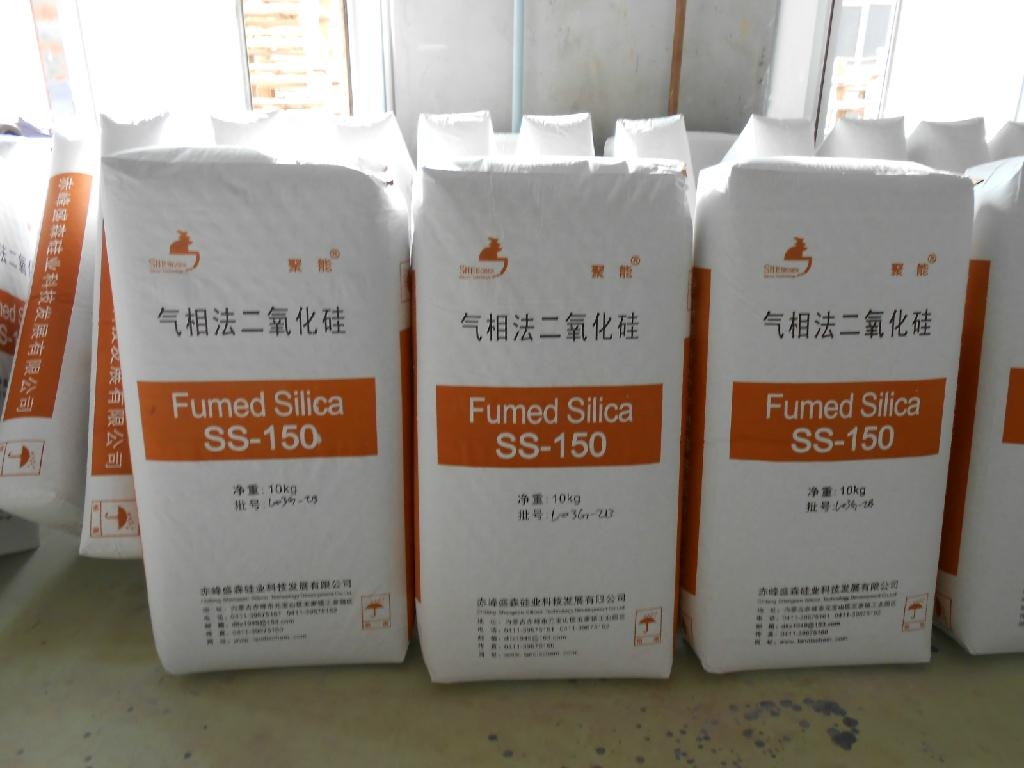
2) Silicon dioxide: SiO ₂, mainly amorphous (such as white carbon black), with a strong covalent network structure. The surface is rich in silicon hydroxyl groups, with a large specific surface area and high activity.
3) Talc powder: Mg₃Si ₄ O ₁₀ (OH) ₂, is a layered silicate with plate-like crystals, possessing a natural lubricating sensation and a certain degree of rigidity.
4) Kaolin: Al ₂ Si ₂ O ₅ (OH) ₄, is also a layered silicate, but its structure and surface chemical properties are different from talc powder, usually with better electrical insulation and chemical inertness.
From the structure, it can be seen that they have several crucial differences:
① Calcium carbonate is the least polymer like substance
It is a typical hard and brittle inorganic particle, and the interface bonding force between it and the polymer matrix mainly relies on physical adsorption and limited surface treatment, with weak intrinsic affinity.
② Silicon dioxide is one of the fillers with the strongest surface interactions
Especially for precipitated white carbon black, the surface is entirely composed of hydroxyl groups, which can generate strong physical adsorption and even hydrogen bonding networks with chain segments. It can easily affect the rheological and mechanical behavior of polymer systems
③ Talc powder and kaolin are essentially fillers with a "sheet-like structure"
This form gives them anisotropy and can form physical barriers in the matrix, restricting the movement of molecular chains. Therefore, it is more efficient in improving rigidity, dimensional stability, and barrier performance.
From the perspective of polymer physics, the role of fillers can be summarized as follows:
1). Limit segment movement (affecting Tg, modulus, creep)
2). Change stress transmission and distribution (affecting strength and toughness)
3). Affects crystallization behavior and processing rheology (nucleation, viscosity, shrinkage)
Different forms of fillers (spherical, sheet-like, high specific surface area amorphous) have vastly different mechanisms and effects in achieving these effects.
2. If you only want to "reduce costs" - then choose calcium carbonate
If your first goal is to reduce costs,Calcium carbonate must be the first choice.
Because the essence of calcium carbonate is:
Raw material: Limestone, with a wide reserve. Process: Grinding/grading/surface treatment is relatively simple and mature. Unit volume price: Almost the lowest among all inorganic fillers. From an engineering perspective, the greatest value of calcium carbonate is in one sentence: it is a "volume filler", not a "performance modifier". The main effects it can bring include significantly reducing the cost of raw materials for products. To some extent, improve the rigidity and modulus of composite materials. Reduce shrinkage and improve dimensional stability. Improve processing performance (such as fluidity) in certain systems. But you should also be aware that its help in strength, toughness, heat resistance, and long-term reliability is very limited, and often even negative. From a microscopic perspective, the reason is also very simple: there is basically no interaction between calcium carbonate particles and polymer chains. Essentially, it is the "stone powder buried in the resin matrix" that is prone to debonding at the interface, becoming a crack source, and premature failure when subjected to stress. Therefore, the experience is that calcium carbonate is a cost oriented filler.
Suitable for daily necessities, disposable products, non structural components, and large quantities of low-priced products with low requirements for mechanical performance and long-term reliability
Not suitable for: any structural components or critical parts with clear requirements for strength, toughness, or durability
Suitable for daily necessities, disposable products, non structural components, and large quantities of low-priced products with low requirements for mechanical performance and long-term reliability
Not suitable for: any structural components or critical parts with clear requirements for strength, toughness, or durability
3.When you start pursuing 'performance', you must look at the other three
If your goal changes from 'as long as it works' to' this thing needs to be stable, reliable, and have structural strength 'Then calcium carbonate will automatically exit the main stage.
At this point, you need to consider Silicon Dioxide Powder, talc powder, and kaolin.
① Silicon dioxide: When you want to "strengthen" and "control rheology"
Its typical application scenarios are highly concentrated in: reinforcing adhesives for rubber products (such as tires and shoe soles), thixotropy of sealants, anti sagging coatings, anti settling of inks, and thickening of silica (especially high specific surface area white carbon black)
The most unique thing is that it is not simply filled in, but rather 'building a network within the system'
Its typical application scenarios are highly concentrated in: reinforcing adhesives for rubber products (such as tires and shoe soles), thixotropy of sealants, anti sagging coatings, anti settling of inks, and thickening of silica (especially high specific surface area white carbon black)
The most unique thing is that it is not simply filled in, but rather 'building a network within the system'
From a microscopic perspective, a large number of hydroxyl groups on the surface can form strong adsorption with polymer chains and even form hydrogen bonding networks between themselves, resulting in a significant increase in the modulus (especially tensile stress) of composite materials. The viscosity of the system increases sharply, resulting in significant shear thinning behavior (thixotropy). The interface bonding of dispersed phases is strong, which facilitates stress transmission.
So you will find that any system that needs to "stand, not collapse, and not flow" often uses silica.
② Talc powder: When you want "rigidity+dimensional stability+heat resistance"
The core value of talcum powder lies not in its chemical composition, but in its sheet-like structure, which brings three very important engineering effects: limiting chain segment deformation like a small steel plate, strongly suppressing thermal shrinkage, and significantly increasing bending modulus and thermal deformation temperature. Therefore, in PP automotive interiors and structural components with high dimensional stability requirements for home appliance shells, talcum powder is almost the preferred or standard filler
From a microscopic perspective, talc powder is essentially an inorganic layer that serves as a framework for polymers.
The core value of talcum powder lies not in its chemical composition, but in its sheet-like structure, which brings three very important engineering effects: limiting chain segment deformation like a small steel plate, strongly suppressing thermal shrinkage, and significantly increasing bending modulus and thermal deformation temperature. Therefore, in PP automotive interiors and structural components with high dimensional stability requirements for home appliance shells, talcum powder is almost the preferred or standard filler
From a microscopic perspective, talc powder is essentially an inorganic layer that serves as a framework for polymers.
③ Kaolin: When you pay attention to "electrical properties, barrier properties, system stability"
Compared to talc powder, kaolin has better electrical insulation, higher purity, fewer ionic impurities, and higher volume resistivity. Good barrier properties: The layered structure is regular and can extend the permeation path of gases and liquids. Stronger chemical inertness: With lower surface acidity, it has less impact on the curing or aging process of certain systems such as adhesives and rubber. So it is commonly used as a functional filler for wire and cable insulation materials, rubber products (such as tire tires, rubber hoses), certain high-performance coatings and sealants, and plastic barrier films. Structurally, it is also a sheet-like silicate, but more functional filler rather than cheap reinforcement.
Compared to talc powder, kaolin has better electrical insulation, higher purity, fewer ionic impurities, and higher volume resistivity. Good barrier properties: The layered structure is regular and can extend the permeation path of gases and liquids. Stronger chemical inertness: With lower surface acidity, it has less impact on the curing or aging process of certain systems such as adhesives and rubber. So it is commonly used as a functional filler for wire and cable insulation materials, rubber products (such as tire tires, rubber hoses), certain high-performance coatings and sealants, and plastic barrier films. Structurally, it is also a sheet-like silicate, but more functional filler rather than cheap reinforcement.
4.The true engineering logic is not 'who to choose', but 'what you want'
In the end, you will find that there is no "best" filler, only the one that best meets the goal. You can follow this logic and ask yourself:
What I want is:
Cost? → Calcium carbonate,
Strengthening or controlling flow? → Silicon dioxide,
Rigid+Dimensional Stability? → Talc powder,
Insulation/Barrier/Stability? → Kaolin
What I want is:
Cost? → Calcium carbonate,
Strengthening or controlling flow? → Silicon dioxide,
Rigid+Dimensional Stability? → Talc powder,
Insulation/Barrier/Stability? → Kaolin
When selecting materials, we need to think more: fillers are not "added", but "participate in the construction of the system structure".
Its introduction directly determines the mobility of molecular chains (glass transition, relaxation behavior)
The transmission and dissipation mechanism of external forces (strength, toughness, fracture behavior)
The initiation and propagation path of defects (fatigue, durability)
The permeation and diffusion process (aging) of environmental media (water, oxygen)
Understanding their essential differences and capability boundaries is the key to not being a blind trial and error maker when designing formulas, but rather a clear minded architect.
Its introduction directly determines the mobility of molecular chains (glass transition, relaxation behavior)
The transmission and dissipation mechanism of external forces (strength, toughness, fracture behavior)
The initiation and propagation path of defects (fatigue, durability)
The permeation and diffusion process (aging) of environmental media (water, oxygen)
Understanding their essential differences and capability boundaries is the key to not being a blind trial and error maker when designing formulas, but rather a clear minded architect.